What a Epicor BisTrack integration gives you.
Shoppers see accurate availability and you avoid overselling across web, B2B, marketplace and in-location channels. Allocation logic sits in BisTrack; commerce reflects it without delay.
Web orders land in BisTrack and flow through to picking and packing without manual rekeying. BisTrack's acknowledgement and back-order logic is transparent to the storefront.
Customer-specific discounts, tiered rates and promotional overrides apply consistently across all commerce channels. Price changes in BisTrack propagate to storefronts within your chosen refresh window.
Customer credit limits and account status control checkout eligibility and order terms. Changes to customer risk profile in BisTrack surface in commerce with minimal delay.
Orders, invoices and credits reconcile clearly between BisTrack and commerce. You can trace revenue by order, customer and nominal code without manual intervention.
Where a Epicor BisTrack integration earns its place.
If two or more of these are true, the integration usually pays for itself quickly.
Where off-the-shelf connectors fall short.
Vendor connectors are fine for simple cases. Here's where the real ones need more.
BisTrack does not publish real-time stock by fulfillment location for retail scenarios. You need custom logic to aggregate warehouse stock into sellable inventory and handle location-based fulfilment routing.
BisTrack processes inbound orders asynchronously. If your storefront requires immediate acknowledgement to the shopper, you must implement a local queue and polling mechanism to catch BisTrack's response and surface it in time.
BisTrack does not natively capture payment instrument data or handle refund reversals. Finance reconciliation between payment gateway, commerce platform and BisTrack requires manual mapping or a third-party reconciliation layer.
Credit limits and account status live in BisTrack but are not available as lookup queries from commerce. You must fetch and cache this data periodically, creating a window where checkout rules may not reflect live account changes.
BisTrack publishes a single pricing and stock truth. Marketplace or B2B channel-specific pricing, bundling or inventory reserves must be managed outside BisTrack or by post-processing the published feeds.
Most oversell incidents happen at the boundary between stock refresh cycles: orders arrive faster than stock publishes, and allocation rules are not visible to the shopper until after purchase.
Where this integration sits in your estate.
Epicor BisTrack holds the commercial record. The iWeb integration layer manages the rules, mappings, monitoring and exceptions. The commerce platform presents the customer-facing experience. The estate map helps agree ownership before anything is built.
No platform lock-in. We integrate Epicor BisTrack with the commerce core you already have, or the one you are moving to.
- Stock availability and warehouse allocation
- Base pricing and customer-specific discounts
- Customer accounts and credit limits
- Web order acknowledgement and fulfillment status
- Invoices, credit notes and general ledger posting
- Storefront user experience and checkout flow
- Customer identity and authentication
- Shopping cart and cart persistence
- Payment capture and authorization
- Order history and customer self-service portals
Systems this integration usually sits next to.
Examples, not a closed list. iWeb is platform-agnostic on both sides: we wire this integration into whatever ecommerce platform and surrounding systems your estate already runs.
- Adobe Commerce
- Magento Open Source
- Shopify Plus
- BigCommerce
- Other storefronts
- Product Information Management (PIM) for content and assets
- Order Management System (OMS) for multi-channel order routing
- Warehouse Management System (WMS) for pick, pack and ship
- Payment gateway for credit card and alternative payment processing
- Customer Data Platform (CDP) for audience and contact segmentation
- Marketplace connectors for Amazon, eBay or industry-specific channels
- Business intelligence and reporting layer for order and revenue analytics
Not sure if this works with your stack?
Tell us what you’re using and what needs to connect. We’ll give you a straight view on what’s possible, what might be awkward, and the safest way to approach it.
The data flows we wire.
Each flow has a direction and an owner. We agree both before a line of code is written.
How iWeb configures the integration around your business.
Same method on every integration. The decisions come before the code.
- 01Build a resilient order inbound
We create a persistent queue for inbound orders so that commerce does not block checkout waiting for BisTrack. Failed submissions are retried with exponential backoff and human alerts.
- 02Design stock sync for multi-location
We map BisTrack's warehouse and allocation logic to your commerce inventory model. Stock publishes at intervals you control, with fallback rules if BisTrack is unreachable.
- 03Govern pricing and discount application
We extract price books, customer agreements and promotional rules from BisTrack and publish them to commerce as a clean feed. Pricing is always BisTrack-authoritative; commerce applies it without override.
- 04Cache and monitor customer credit
We fetch customer credit limits and account status from BisTrack on a schedule you define. We monitor cache freshness and alert if the data is stale or BisTrack is unavailable.
- 05Map orders to ERP nominal codes
We build the bridge between commerce order lines, tax treatment and BisTrack's general ledger. Each transaction lands in the correct account with the right VAT and product coding.
Who owns what.
The single most important table in any integration. One system owns each field; everything else reads it.
Built this before
iWeb has integrated Epicor BisTrack with ecommerce platforms in distribution, manufacturing and field-service environments where inventory accuracy and order-to-cash speed are critical. We understand how BisTrack's asynchronous order processing, multi-location allocation and pricing governance sit alongside commerce, OMS and fulfillment systems.
What we test before launch.
Every one of these is rehearsed before a customer ever sees the integration.
Common risks and where they bite.
We name these on day one. A risk written down is a risk you can plan around.
If stock publishes to commerce on a 15-minute cycle but orders flow into BisTrack in real time, a surge of orders can allocate stock that has already been claimed. You must choose a sync interval that matches your channel volume and tolerance for back-orders.
If BisTrack is slow or temporarily offline, web orders may back up in the local queue. If the queue is not monitored and exceptions not escalated, orders can sit for hours before anyone notices.
If the credit cache is stale and BisTrack cannot be reached, you must decide whether to allow checkout to proceed or reject it. If you reject without alerting the customer or support team, legitimate orders are lost.
If a price-book change in BisTrack does not reach commerce before the next order, the order may be submitted at an old rate. Revenue reconciliation then becomes a manual dispute.
If you wait for BisTrack's order acknowledgement before confirming to the shopper, and BisTrack is slow, checkout hangs. You must implement a timeout and a local fallback so the shopper always gets a response.
If invoices flow back from BisTrack faster than your reconciliation pipeline can process them, or if invoice numbers collide with manual adjustments, your audit trail becomes unreliable.
Relevant services and sectors.
Common questions about Epicor BisTrack integrations.
How often does stock refresh from BisTrack to the storefront?
Stock publishes on a schedule you control - typically every 15 to 60 minutes depending on order volume and your acceptable oversell risk. Real-time sync is not feasible because BisTrack processes allocations asynchronously. Between refreshes, commerce shows the last-published inventory. If you need instant availability updates, you must implement a webhook or API callback from BisTrack when stock changes, which requires custom development.
What happens to a web order if BisTrack is offline when it arrives?
Orders queue locally in commerce or a middleware layer. iWeb builds retry logic that resubmits orders to BisTrack at intervals until they are acknowledged or a deadline is reached. If the deadline passes without acknowledgement, support is alerted and can manually intervene. The shopper is notified of the delay via email.
Do customer-specific prices apply automatically at checkout?
Yes, if customer identity is passed to commerce and pricing is tagged by customer or customer group in BisTrack. iWeb maps BisTrack's pricing tiers and agreement rules to your storefront's pricing engine. If a customer does not match a specific agreement, the base price applies. Price recalculation happens at cart time.
How do credit limits prevent overselling on customer accounts?
BisTrack publishes customer credit limits to commerce. At checkout, commerce checks the order total against the cached credit limit and either allows or blocks the sale. The cache refreshes on a schedule you define. If you want real-time credit checks, BisTrack must expose a synchronous API query, which may require additional BisTrack configuration.
How do orders reconcile to general ledger accounts?
Each order line in commerce is tagged with a product code that maps to a BisTrack general ledger account and VAT code. When the order reaches BisTrack, it uses that mapping to post revenue to the correct account. iWeb builds and tests this mapping so that your monthly P&L rolls up cleanly from transactional orders.
Can we use BisTrack for B2B and B2C channels simultaneously?
Yes. iWeb configures commerce to route orders to BisTrack with channel-specific fields so that B2B orders (e.g., with purchase order numbers and net terms) and B2C orders (e.g., with payment captured) are both acknowledged and fulfilled correctly. Pricing and credit rules can differ by channel if you set them up in BisTrack.
What happens when a customer requests a refund?
Refunds are initiated in commerce or your OMS and flow to BisTrack as credit memos. BisTrack generates a credit note and posts it to the customer account. The credit note flows back to commerce for customer visibility. iWeb ensures that refund amounts reconcile to the original invoice so that finance has a clear audit trail.
How does inventory adjust if a physical stocktake uncovers a variance?
Physical counts and variances are recorded in BisTrack as stock adjustments. These adjustments flow into the next stock refresh cycle and update commerce. iWeb monitors the variance between published stock and actual allocations so that large discrepancies are flagged for investigation.
Can we override a BisTrack price in commerce for a promotion or clearance?
We recommend managing all pricing in BisTrack to keep it single-source. If you need short-term overrides (e.g., flash sales), you can implement them in BisTrack and republish, or manage them in a separate promotion engine that sits ahead of BisTrack pricing. Overriding BisTrack prices in commerce creates reconciliation risk and should be avoided.
What observability do we have into order and stock sync failures?
iWeb builds dashboards and alerts for failed order submissions, stock sync delays, pricing drift, and credit lookup failures. You receive daily reports of exception queues and can drill into individual transactions. Critical failures (e.g., stock not updated for 2 hours) trigger immediate alerts to your operations team.
How do we handle multi-location orders that span fulfillment centres?
BisTrack tracks inventory by warehouse and location. When an order arrives, BisTrack's allocation engine assigns items to the nearest fulfillment centre or follows a routing rule you define. iWeb ensures that orders are marked with their assigned location so that logistics can pick and pack correctly.
What happens to our commerce data if we upgrade or replatform BisTrack?
The integration is built on BisTrack's standard APIs and data structures, so upgrades typically require only testing. If you migrate to a different ERP, iWeb can rebuild the integrations to the new system. We document all field mappings and logic so that the data model is portable.
Other erp · finance integrations.
Adjacent integrations in the same category. Same shape of work, different vendor.
Projects with a similar shape.

A wholesale B2B foodservice platform rebuilt around speed to market, mobile activity and product data.
Trade ordering supported through faster time to market, stronger mobile activity and updated product data.

A product data platform shaped around catalogue accuracy and downstream commerce.
Butchery and foodservice wholesale supported by Akeneo PIM, Adobe Commerce and Aptean ERP integration.
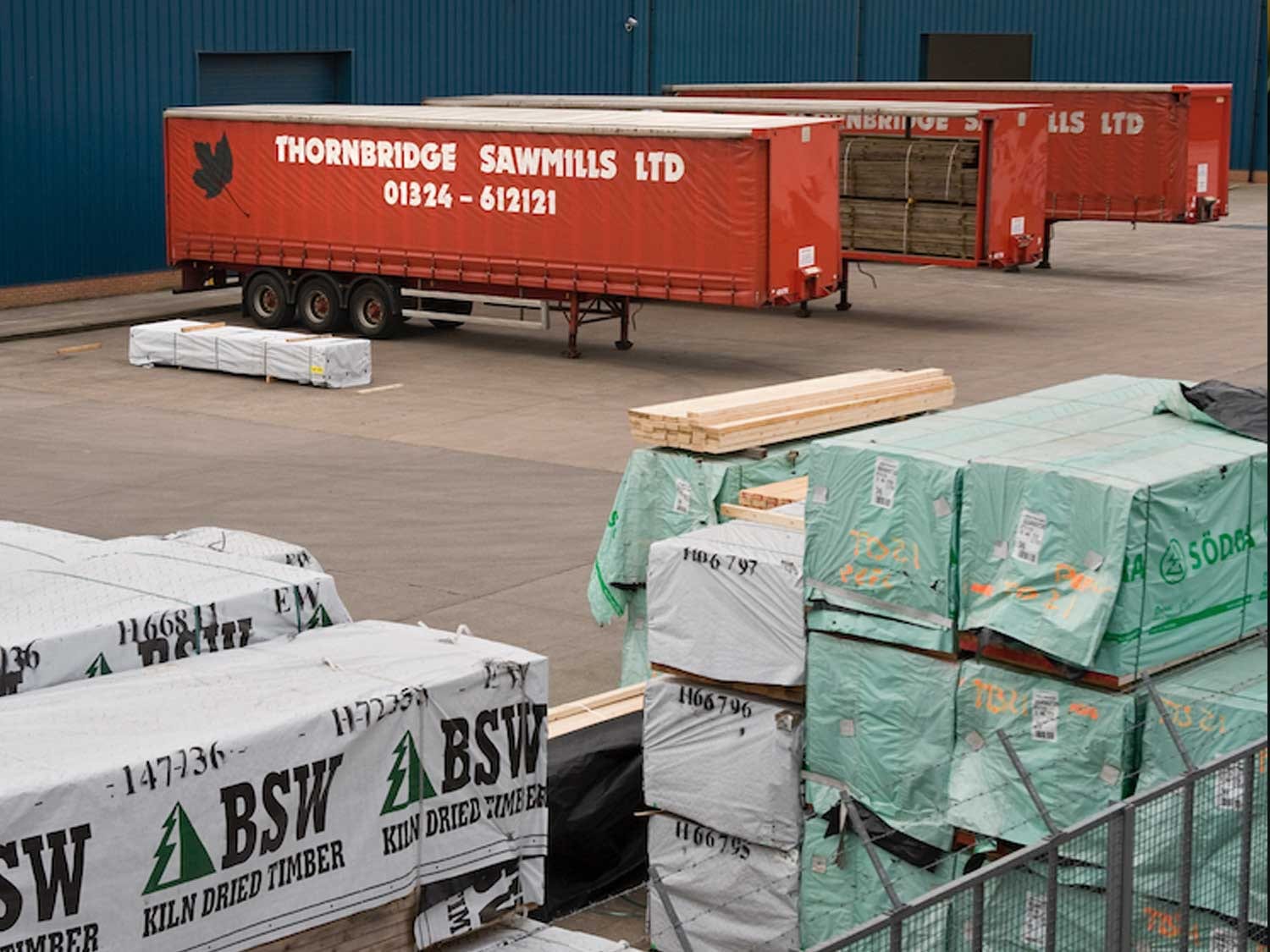
A timber merchant PWA built around branch trading, product data and trade customer journeys.
Timber purchasing supported by stronger mobile sessions, add-to-cart activity and cleaner product data.