- 01 -Builders & tradeBranch stock, trade pricing, account terms, quote-to-order and collection workflows all need to work before the yard opens.Read →
- 02 -Food & beverageAccount pricing, cut-off times, depot routing, substitutions and repeat ordering need to hold together overnight and before service starts.Read →
- 03 -Manufacturing & industrialTechnical attributes, procurement workflows, distributor logic, fitment data and ERP rules need structure buyers and sales teams can trust.Read →
- 04 -Automotive & partsFitment, compatibility, VIN data, supersession chains, dealer pricing and stock visibility sit underneath every useful parts search.Read →
- 05 -Retail & homeConfigured products, store handoffs, supplier stock, delivery rules and considered purchases need a buying flow that does not drop the basket.Read →
- 06 -Health & wellnessRegulated product data, versioned claims, accessibility, audit trails, subscriptions and donation flows need careful governance.Read →
Builders'merchants
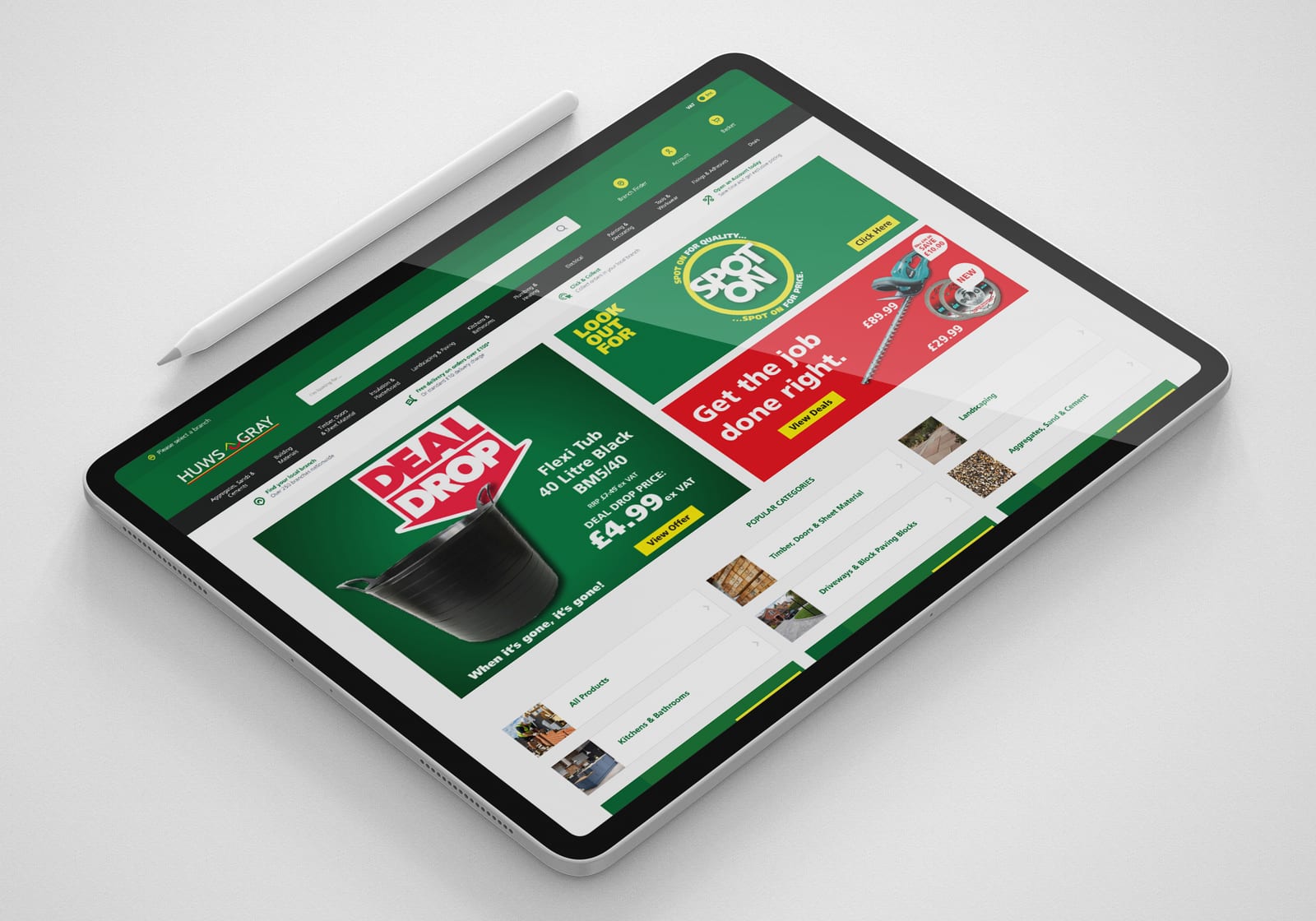
Merchants trade against branch stock and contract pricing, not against a homepage. By the time the customer logs in, the day's order is already half-decided. Friction at checkout is friction in a working van.

Branch-level stock, customer-specific pricing, trade accounts placed before the yard opens. The platform is judged on reliability and accuracy, not novelty.
- 01Branch-aware inventoryReal availability, not generic stock counts.
- 02Customer-specific pricingTiered, contracted, sometimes line-by-line.
- 03Trade-account workflowsStatements, credit limits, project quoting.
- 04Click-and-collect timingHours-of-day matter as much as days-of-week.
Operational complexity is rarely visible from the homepage.”
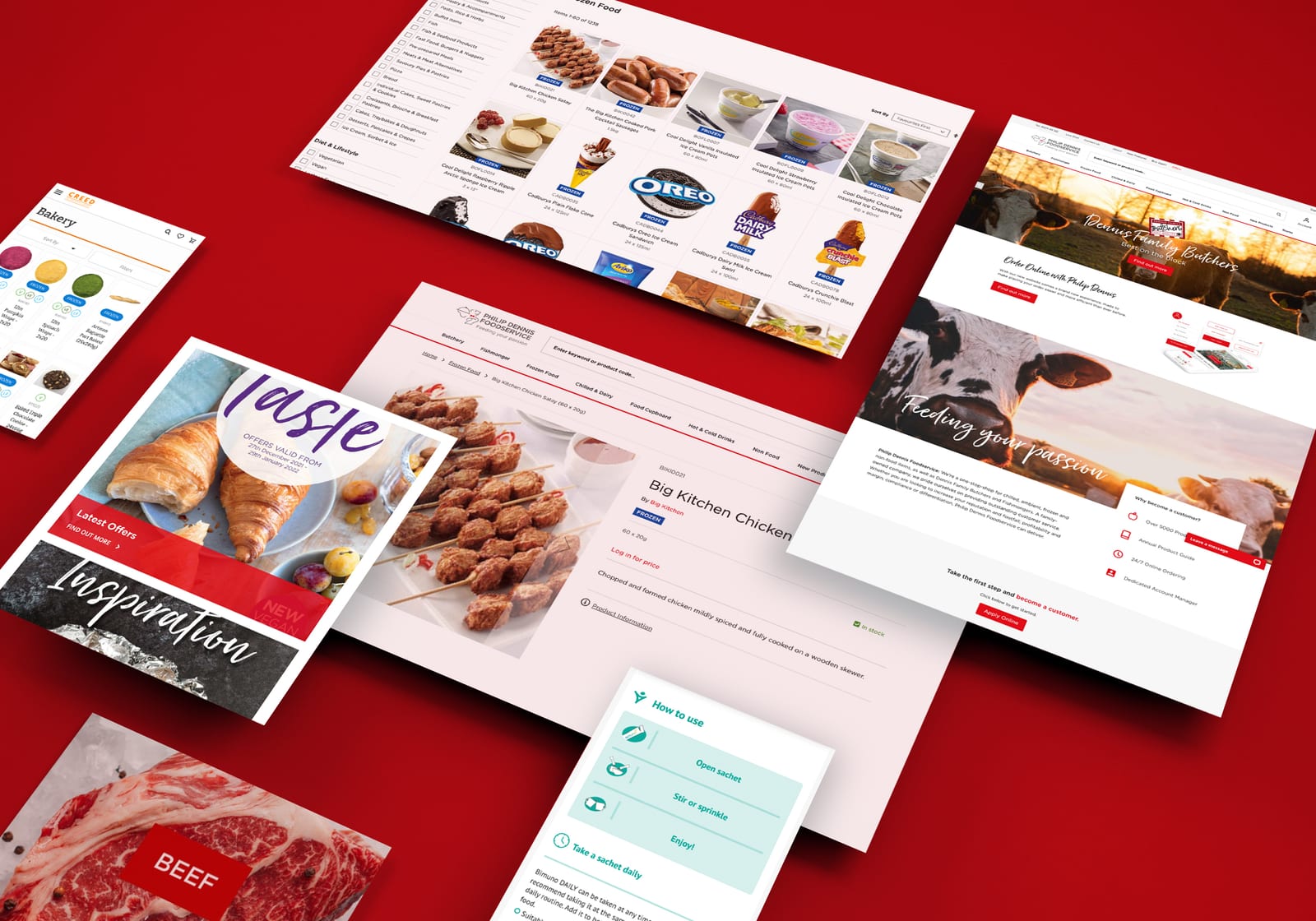
Food wholesale& foodservice
Foodservice platforms fail on cut-offs long before they fail on design. The 7pm order, the 09:00 delivery, the substitution flow at 06:42 - these are the load tests that matter. The cold chain does not wait for a redeploy.
- 01Order cut-off enforcementTime-windowed, depot-specific, customer-aware.
- 02Route & depot logicAvailability that knows where the lorry is going.
- 03Substitutions at the lineLive stock and customer-specific allowed-substitutes.
- 04Repeat-order workflowsStanding orders, templates, scheduled baskets.
Most friction sits between systems, not inside them.”

Manufacturing& industrial
In manufacturing, the commerce platform fills an ERP-shaped hole. Procurement, fitment, supersession and supply chain are decided elsewhere. The platform's job is to surface those decisions correctly, every time, without inventing them.
- 01Fitment & compatibilityVehicle, machine, application-specific lookups.
- 02Procurement workflowsPO-driven, approval-chained, audit-trailed.
- 03ERP / PIM dependencyTruth lives elsewhere, commerce reads, not writes.
- 04Supersession logicPart-number history without orphaning orders.
In these industries, commerce is infrastructure.”
Automotive& parts
In automotive, the platform is downstream of engineering and upstream of the workshop. Supersessions, regional variants and dealer networks shape what a buyer can see and order. Search has to be answer-first; merchandising sits behind technical correctness, not in front of it.
- 01VIN & fitment lookupsVehicle-application data underneath every product page.
- 02Supersession chainsPart-number history without orphaning open orders.
- 03Dealer pricing tiersDistributor, dealer and direct prices on one stack.
- 04Parts-finder relevanceSearch answers under technical, not marketing, data.

Retail& home
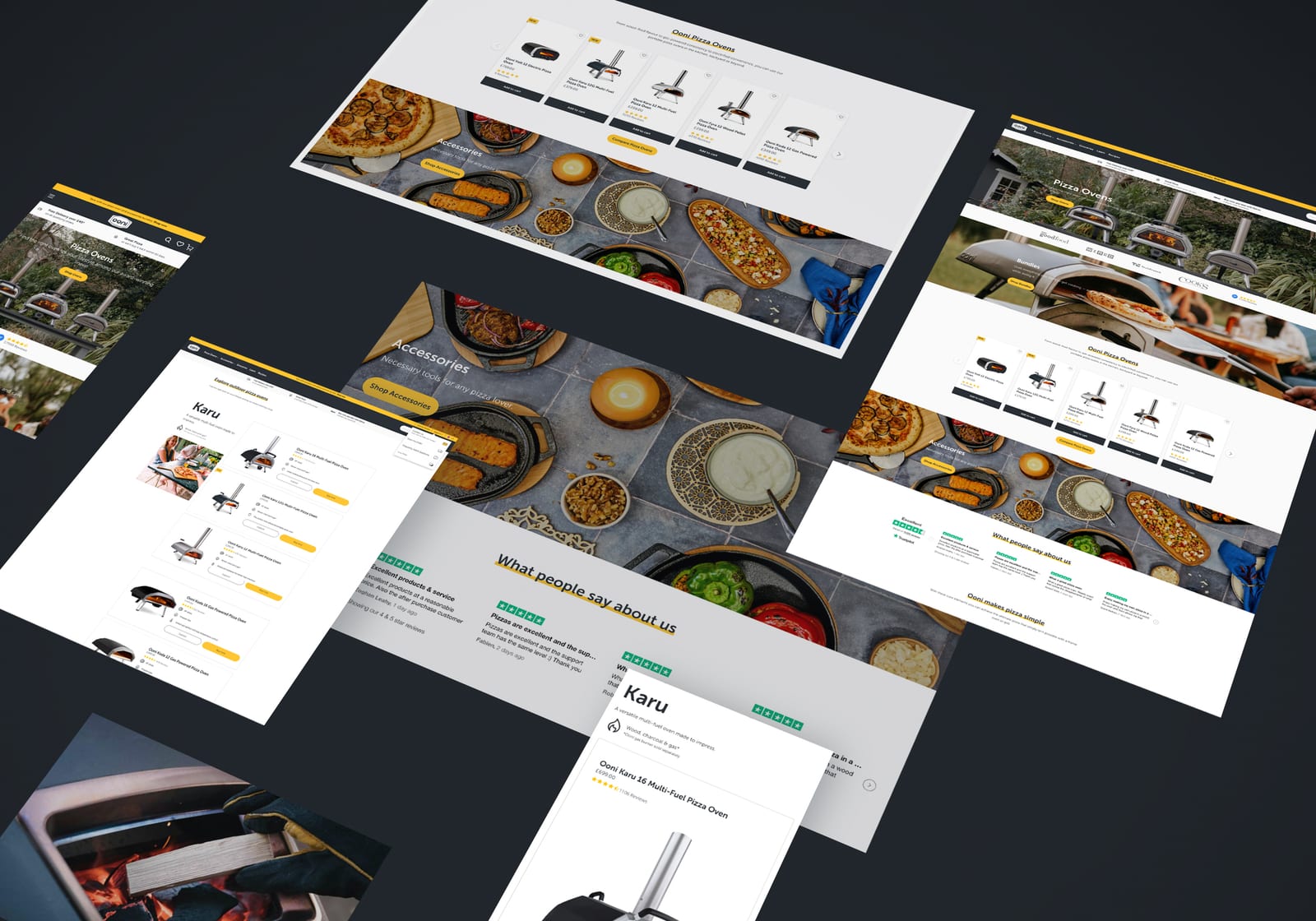
Home retail is where every system meets the customer: stock from the warehouse, lead times from the supplier, finance terms from a third party, delivery from a fourth. The platform is the only place those agreements have to read as one promise.

Considered, big-ticket purchases. Long browsing sessions, configurator-led baskets, in-store handoffs. Conversion is a sequence of patient decisions, not an impulse.
- 01Configurator & made-to-orderLive availability against configuration choices.
- 02Long lead times, honestly toldDelivery promises that survive contact with reality.
- 03In-store / online handoffSame basket, same price, same person.
- 04Returns and exchanges, high-volumeReverse logistics built in, not bolted on.
Different sectors produce different operational truths.”
Health, beauty& regulated
In health, beauty and charity, the commerce platform is the last surface before regulatory exposure. Versioned product content, signed-off claims, Gift Aid that reconciles, WCAG 2.2 AA built in rather than retrofitted. The serious work sits in the governance layer, not on the homepage.
- 01Regulated product dataIngredients, claims, contraindications, versioned.
- 02Audit-ready contentWho changed what, when, signed off by whom.
- 03Accessibility at AA+WCAG 2.2 embedded by design, not retrofitted.
- 04Charity / non-profit commerceDonation flows, Gift Aid, supporter data.
Different sectors do not only look different.
The pressure points are different.
- Builders' merchants
- Branch stock, customer-specific pricing, trade accounts and click-and-collect all need to line up before the storefront can do its job.
- Foodservice
- Cut-off times, substitutions, depot routing, account pricing and repeat ordering have to work before the first delivery window opens.
- Manufacturing
- Technical catalogues, fitment data, procurement workflows and ERP rules need clean structure before buyers can trust the site.
- Automotive & parts
- Fitment, supersession, VIN lookup, dealer pricing and catalogue structure decide whether customers can find and order the right part.
- Healthcare & charity
- Governance, accessibility, audit trails, regulated content and donation flows need more care than a standard retail build.
- Retail & home
- Configured products, store handoffs, supplier stock, delivery rules and considered purchases all need the basket to survive the buying flow.



The work underneath, in plain terms.
Sector understanding is the front of house. These services are what makes that understanding actionable.
- 01ReplatformOff legacy, onto a stack built for the next decade of trading.Read →
- 02BuildGreenfield enterprise commerce, B2C and B2B, sized for scale.Read →
- 03RescueStalled projects, failed go-lives and performance crises.Read →
- 04SupportSLA-backed support, 99.98% uptime, direct engineer access.Read →
- 05PIM & DataProduct data and governance that survive the next replatform.Read →
- 06AI for CommerceSearch, merchandising, content and agent workflows, in production.Read →
Common questions about iWebs sector work.
What sectors does iWeb specialise in?
Builders merchants and trade, foodservice and beverage, manufacturing and industrial, automotive and parts, retail and home, and health and wellness. These are the operations where the patterns repeat: ERP-integrated pricing, branch or depot stock, trade accounts and deep catalogues.
Does iWeb work outside those sectors?
Yes, on the right brief. Sector pages exist where the operational pattern repeats often enough to compound experience. Outside those sectors, iWeb still takes work where the trading model fits: ERP-integrated commerce, complex catalogue, B2B trade or multi-territory operation.
Why does sector experience matter at all?
Because most ecommerce friction is operational, not cosmetic. Pricing rules, stock logic, account structures, fulfilment routes and ERP boundaries differ by sector. Knowing where the patterns repeat means projects start with the right shape rather than learning it during build.
What does iWeb do for builders merchants and trade?
Trade-account commerce with customer-specific pricing, branch stock visibility, click and collect, ERP-integrated credit terms and depot-aware delivery. Usually on Adobe Commerce or Magento with PIM-governed trade catalogues and a written integration boundary with the merchant ERP.
What does iWeb do for foodservice and beverage?
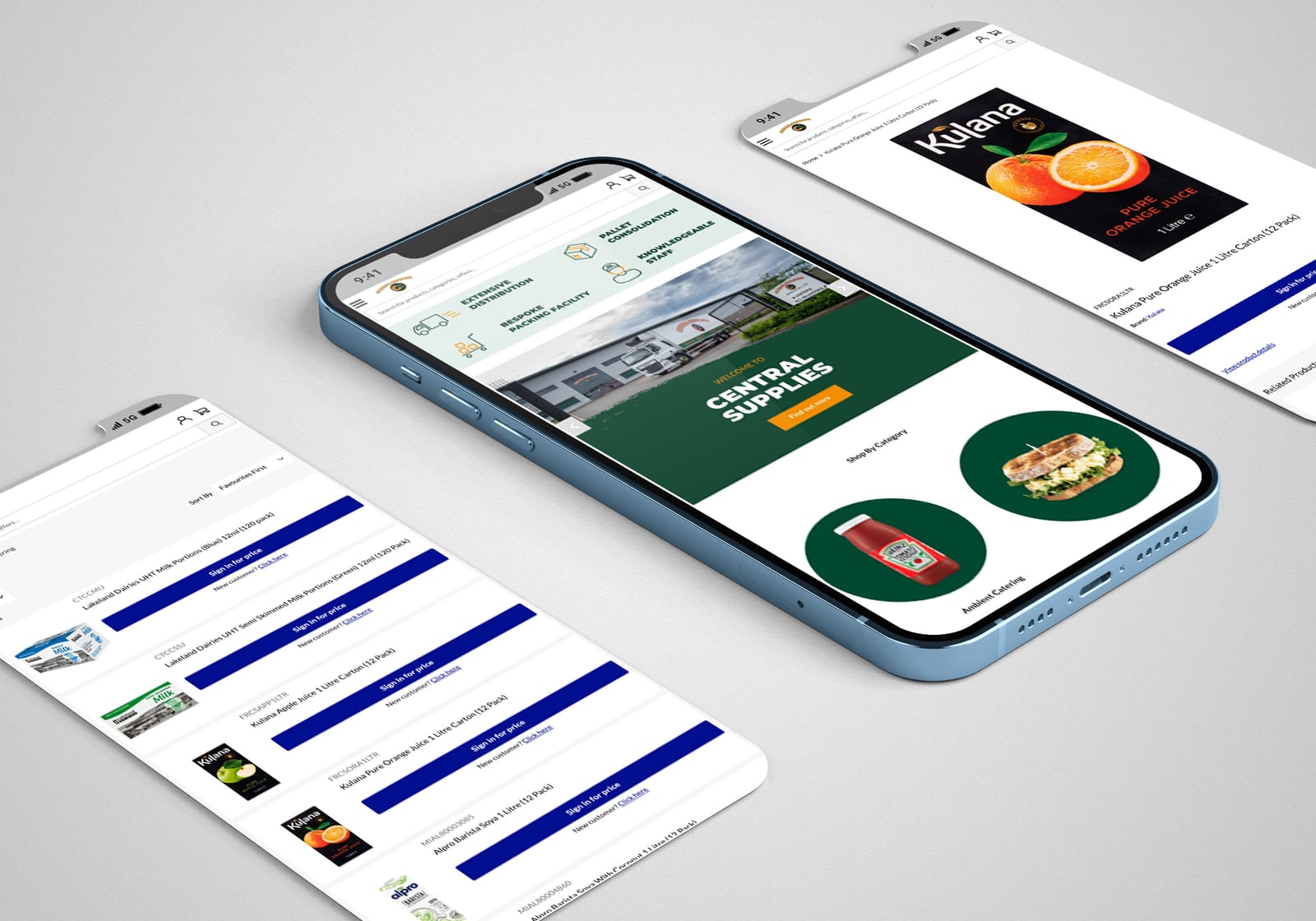
B2B wholesale and foodservice ordering with depot-aware cut-offs, route-based delivery windows, account-specific catalogues and ERP-integrated pricing. The catalogue often blends ambient, chilled and frozen, with substitution logic and order-pad workflows tuned to how customers actually reorder.
What does iWeb do for manufacturing and industrial?
ERP-integrated B2B commerce with PIM-governed technical catalogues, variants by specification, account quote-to-cart and integrations into Microsoft Dynamics, SAP, Epicor or proprietary ERPs. The pattern fits engineered products, industrial distributors and direct-to-trade manufacturers.
What does iWeb do for automotive and parts?
Parts and fitment-led commerce with PIM-governed technical attributes, vehicle compatibility logic, regional catalogue variants and integrations into parts ERPs. Direct experience on Adobe Commerce and Magento where the catalogue depth and B2B model already fit the platform.
What does iWeb do for retail and home?
Multi-territory retail with PIM-led product experience, lifestyle merchandising and search tuned to a retail query mix. Direct project experience on Adobe Commerce and Magento; the pattern applies to other platforms where merchandising and catalogue tooling support it.
What does iWeb do for health and wellness?
Supplements, vitamins and wellness commerce with subscription, regulated-content rules, practitioner workflows and account management. Direct project experience on Adobe Commerce and Magento; the pattern applies to other platforms where subscription and account tooling support it.
How do sector-specific ERP, PIM and stock rules shape the build?
They are inputs to the platform decision, not implementation details. ERP shapes pricing and stock; PIM shapes catalogue and attribute governance; stock shapes order routing and fulfilment promise. The platform is chosen against those inputs rather than the other way round.
How does iWeb handle merchants who serve both B2B and B2C?
Account-aware storefronts with shared catalogue and divergent pricing, account-only ranges, credit terms and trade-only features behind login. The same storefront can serve both audiences honestly when the catalogue and account structure are modelled for it from the start.
How are trade accounts modelled?
Account hierarchy, contracted pricing, credit limits, payment terms, approvers and account-only catalogues mirrored from the ERP. The storefront reads the account view live where it matters and caches where it can; reconciliation back to the ERP is monitored, not assumed.
How are branch, depot and warehouse patterns handled?
Stock and fulfilment promise are computed against branches or depots, not a single national pool. Click and collect, partial dispatch and branch transfer are modelled in the OMS where the operation needs them, with the boundary to ERP and WMS written down.
How is fulfilment complexity handled by sector?
Pallet, hazardous, chilled, oversized, kit-build and installation are catalogued where the sector needs them. Carrier selection, surcharge logic and route-aware promises are wired into the OMS rather than left to the storefront to guess at checkout.
How does product data differ by sector?
Trade catalogues need technical attributes and supplier data; foodservice needs allergens and pack data; automotive needs fitment data; health needs regulated content. PIM is shaped to each pattern rather than forced into a generic template. The attribute model is named, not inherited.
How does platform choice differ by sector?
Trade and complex B2B usually favour platforms with deep account, pricing and catalogue modelling. Lighter retail can land cleanly on simpler platforms. iWeb names the trade-off in writing rather than defaulting to a preferred vendor for every sector.
How is sector proof mapped on case studies?
Case studies are labelled by sector and operational shape, not by logo. Adjacent projects are labelled adjacent. Outcomes are evidenced and the right to publish is held. There are no anonymous logos or unverifiable claims in the proof set.
Why do sector problems differ even when the storefront looks similar?
Because the work behind the storefront differs: pricing rules, account structures, stock logic, fulfilment routes, ERP boundaries and regulatory content all change. Two clean-looking storefronts in different sectors are doing very different things behind the scenes.
What operational risks vary by sector?
Trade account pricing drift, stock accuracy across branches, regulatory content, allergen and hazard data, fitment errors and territory tax differ in weight by sector. iWeb names the main operational risks early so trading and integration design address them by build, not at launch.
How do support needs differ by sector?
Trade and foodservice trade through the working day with little tolerance for outages; multi-territory retail trades across time zones; health and regulated catalogues need editorial review on every release. Support cadence and on-call cover are shaped to the trading window rather than offered as one template.
When is the right time to speak to iWeb about a sector engagement?
When the operational shape is starting to outgrow the storefront, when the ERP or PIM boundary is becoming the bottleneck, or when a sector-specific buyer behaviour change is not being served. A senior written read can be commissioned ahead of any commitment to a build or replatform.