
What a VTEX integration gives you.
Attributes, images and variants flow from the PIM into VTEX under approval rules, so only complete, signed-off products publish to the storefront.
Live stock and pricing sync from the ERP with reservation logic and rounding rules, so customers see what is actually available at the right price.
Web orders post into the ERP and OMS with the right customer, tax and credit context, and acknowledgements flow back to VTEX for shopper visibility.
Inventory and pricing are allocated across VTEX and marketplaces so channels do not oversell each other or drift out of alignment.
Customer accounts, credit limits, consent and suppression sync between VTEX, the ERP and the CRM so identity resolves consistently across channels.
Payments, refunds and settlements from VTEX reconcile back to the ERP ledger, so month-end is not a manual reconciliation project.
Where a VTEX integration earns its place.
If two or more of these are true, the integration usually pays for itself quickly.
Where off-the-shelf connectors fall short.
Vendor connectors are fine for simple cases. Here's where the real ones need more.
VTEX captures orders but does not enforce field mapping, credit checks or acknowledgement ownership. Without governance, orders stall between systems.
VTEX can hold product content, but rich attributes, variants and approval workflows belong in a PIM. Without that boundary, product data drifts and merchandisers lose control.
Multi-location stock, customer-specific pricing, rounding rules and promotional overrides can create oversell or pricing errors if the ERP-to-VTEX sync is not carefully designed.
Syncing inventory, pricing and orders across multiple marketplaces alongside VTEX needs allocation and deduplication rules, or channels oversell each other and lose orders to silent failures.
VTEX integrates payments and SSO, but customer records can fragment across payment processors, identity providers and CRM. Identity resolution and payment reconciliation need explicit design.
The VTEX connector is rarely the whole integration. The real work is deciding which system owns the data, what happens when a sync fails, and how trading carries on.
VTEX integrations usually expose the operational decisions behind pricing, stock, customer accounts, fulfilment and finance.
Systems this integration usually sits next to.
Examples, not a closed list. iWeb wires VTEX into whatever ERP, PIM, OMS, WMS, payments and operational systems your estate already runs.
- ERP
- PIM
- OMS
- WMS / 3PL
- Payments
- Search
- Marketing / CRM
- Marketplaces
Not sure if this works with your stack?
Tell us what you’re using and what needs to connect. We’ll give you a straight view on what’s possible, what might be awkward, and the safest way to approach it.
The data flows we wire.
Each flow has a direction and an owner. We agree both before a line of code is written.
How iWeb configures the integration around your business.
Same method on every integration. The decisions come before the code.
- 01PIM into VTEX with governance
iWeb connects VTEX to the PIM so attributes, images, variants and approval workflows govern what publishes. Completeness rules and channel-readiness checks are enforced before publication.
- 02ERP stock and pricing sync
iWeb designs the ERP-to-VTEX stock and pricing sync with reservation logic, oversell prevention, multi-currency handling and promotional-price rules. Monitoring alerts on stale data or failed syncs.
- 03Order capture and acknowledgement
iWeb builds the VTEX-to-ERP order flow so every order reaches the ledger with correct customer, items, pricing and credit checks. Acknowledgements confirm back to VTEX and exceptions have a named owner.
- 04OMS and fulfilment routing
iWeb connects VTEX to the OMS for order routing, allocation, split shipment and warehouse assignment. Fulfilment status and tracking flow back to VTEX so customers see real progress.
- 05Marketplace and multi-channel orchestration
iWeb syncs product data, inventory and pricing across marketplaces and VTEX. Orders flow in from each channel and allocation rules prevent double-selling.
- 06Observability and exception handling
iWeb builds the monitoring and alerting layer so integration failures surface quickly. Exception queues are owned and fallback behaviour is defined before launch.
Who owns what.
The single most important table in any integration. One system owns each field; everything else reads it.
What we test before launch.
Every one of these is rehearsed before a customer ever sees the integration.
Common risks and where they bite.
We name these on day one. A risk written down is a risk you can plan around.
Orders complete in VTEX but fail to post to the ERP due to missing fields, credit failures or data mismatches. Without a named exception owner they are lost or re-keyed manually.
Stock or pricing sync from the ERP to VTEX fails silently, leaving customers seeing incorrect availability or prices. Oversell follows, or promotions do not apply, and reconciliation drifts.
Without PIM governance, product content lives on VTEX. Attributes go missing, variants are wrongly modelled, and products publish before approval. Marketplaces reject listings.
Stock sync to marketplaces alongside VTEX happens independently. Allocation is not orchestrated, channels oversell each other, and fulfilment cannot honour every order.
Customer records, preferences and suppression lists are not synchronised between VTEX, CRM and identity systems. Suppression goes stale, unsubscribes do not propagate, and identity fails at checkout.
Payment captures, refunds and chargebacks do not reconcile cleanly to the ERP ledger. Finance reconciliation fails, refund reversals slip, and dispute timelines are missed.
Relevant services and sectors.
Common questions about VTEX integrations.
What data typically syncs between VTEX and the ERP?
Stock, base and list pricing, customer accounts and credit limits, orders and invoices, tax context and fulfilment status. Some values read live from the ERP, some are cached at the VTEX boundary, and some post asynchronously through monitored queues. Cadence is named per integration rather than assumed.
How do we prevent VTEX overselling when stock also feeds marketplaces?
iWeb orchestrates allocation so inventory is shared fairly across VTEX and each marketplace. Reservation logic prevents double-selling, and stock reconciliation is monitored. Allocation rules are configurable per channel and reviewed against real trading patterns.
What happens if the ERP-to-VTEX stock or price sync fails?
Monitoring and alerting catch stale or missing data immediately. Fallback behaviour is defined in advance: VTEX can show a conservative stock buffer, flag items as out-of-stock or trigger manual review. Oversell prevention is built into the reservation logic rather than assumed.
How do orders move from VTEX into the ERP and OMS?
iWeb defines the order handoff so every VTEX order reaches the ERP with the correct customer, items, pricing, tax and credit status. The OMS (if present) receives fulfilment instructions. Order acknowledgements flow back to VTEX so customers see confirmation, and exceptions route to a named owner.
Can VTEX serve different pricing for customer segments or regions?
Yes. iWeb works with the ERP to send base, customer-specific, regional or promotional pricing into VTEX. The integration respects currency, tax and margin rules, and monitoring alerts on unexpected deviations or stale price feeds.
How does customer identity and consent stay aligned across systems?
Customer accounts, preferences, consent flags and behavioural events sync between VTEX and the CRM. Suppression and unsubscribes flow in both directions, and customer identity resolves across channels so the CRM sees a complete view.
How does payment reconciliation work between VTEX and the ERP?
Payment events from VTEX (authorisation, capture, refund, chargeback) post into the ERP so finance can reconcile settlements. Payment processor reconciliation files are matched to orders and mismatches are flagged for investigation rather than absorbed silently.
Do off-the-shelf VTEX connectors work?
They can be a useful starting point. They usually fall short on customer-specific pricing, multi-location stock, account hierarchy, credit workflows and the monitoring a live trading site needs. iWeb is honest about where a connector covers a boundary cleanly and where it needs configuration, replacement or wrapping with monitoring, retries and reconciliation.
How should a VTEX integration be tested before launch?
Contract tests at each VTEX API surface, a staging environment that mirrors production data shape, end-to-end rehearsals against realistic order volumes, and post-deploy reconciliation. Trading-critical flows (price, stock, order posting, credit limits) are rehearsed first because that is where VTEX integrations usually fail at launch.
Can iWeb rescue an existing VTEX integration?
Yes. Rescue starts with an audit of existing integration contracts, monitoring coverage, reconciliation gaps and runbook completeness across the VTEX boundary. Remediation is sized against trading impact: price drift, stock drift and order posting failures usually take priority. The first month on support is deliberately conservative on change while the team learns the existing pattern.
Who owns and supports a VTEX integration after launch?
Ownership is named before launch. iWeb supports the integration boundary, the queues, the monitoring and the runbook; the customer owns VTEX configuration, master data, finance approvals and any third-party connector contract. On-call coverage, escalation paths and change windows are written down rather than assumed.
How long does a VTEX integration usually take?
It depends on the data model, the number of systems in scope, pricing rules, stock logic, testing needs and whether an existing integration needs rescue. iWeb scopes the integration boundary first, names the realistic shape and risks in writing, and sequences the work around trading impact rather than promising a fixed timeline before the boundary is understood.
Projects with a similar shape.

A security and access solutions PIM project built around product data and B2B complexity.
Security product data made easier to manage across sales channels, teams and technical catalogues.

A flooring commerce platform built around product calculation, delivery and trade ordering.
Flooring purchases made easier through area-based calculation, clearer ordering and connected fulfilment.
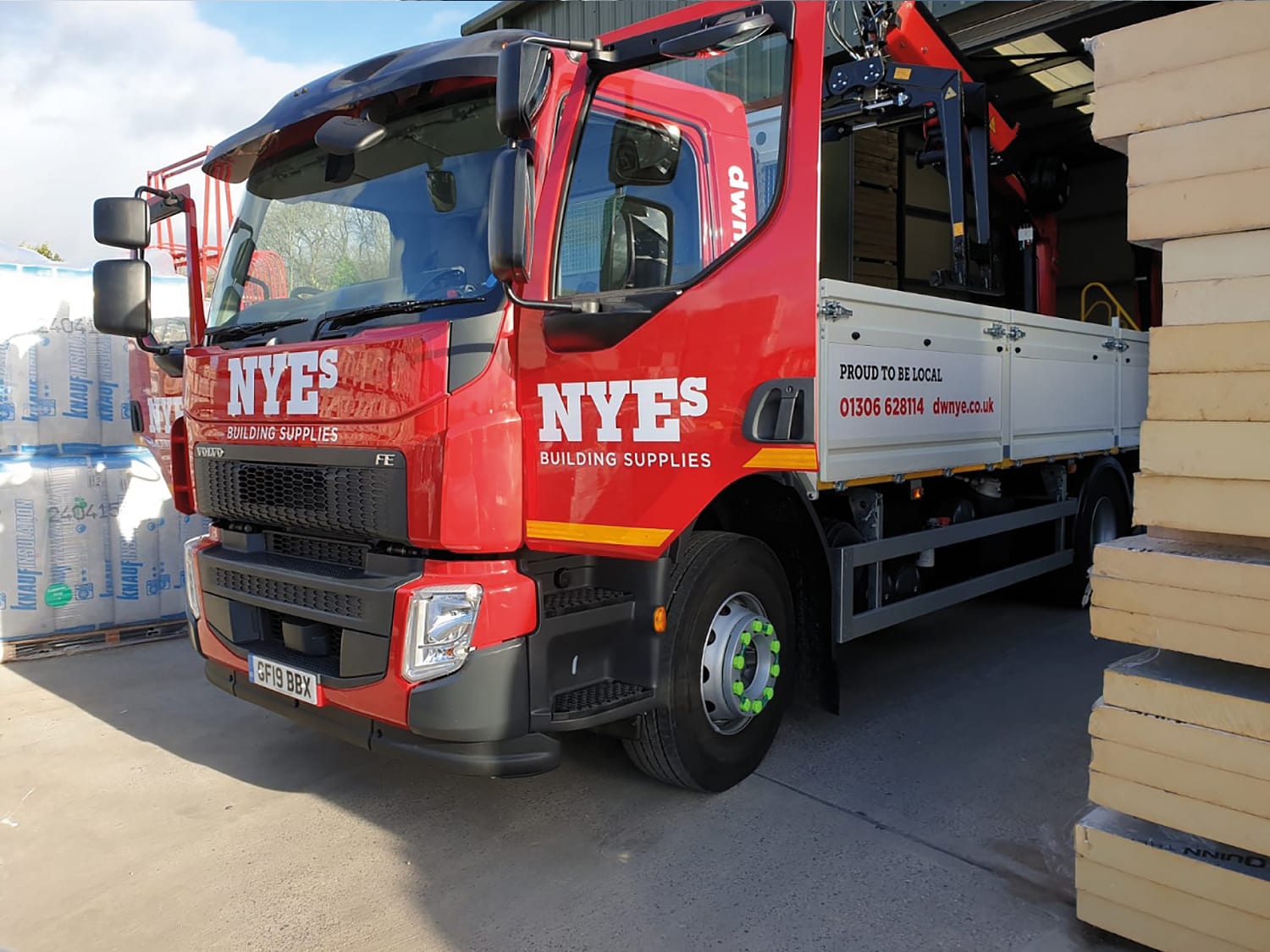
A builders' merchant platform rebuilt around trade customers, repeat purchasing and admin efficiency.
Trade ordering supported by less manual admin, more returning customers and faster routes to market.